Practical Education
Balancing efficiency against overstimulation in the classroom
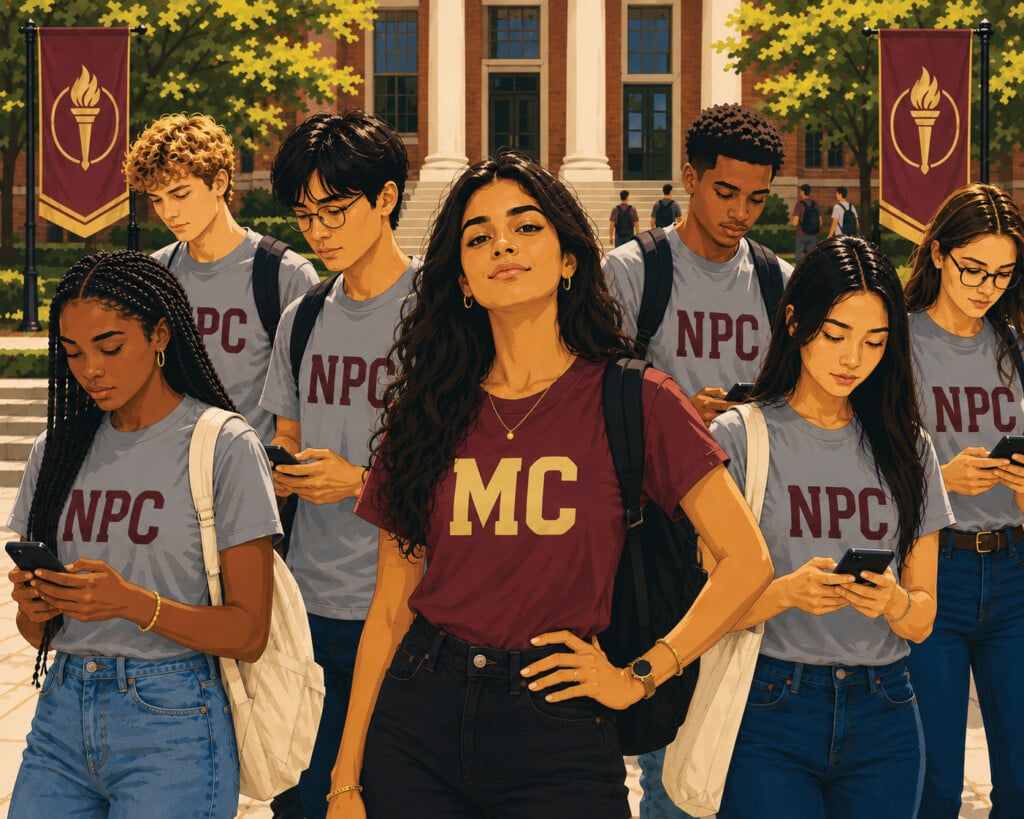
A distracted mind is the antithesis of frequent switching between tasks lowers retention of information, causing students who use smart devices inappropriately during lectures to perform worse than those with guided focus.
People who frequently multitask have a strong belief in their capability to perform optimally while juggling many tasks at once; however, research disagrees. According to an article published by the American Psychological Association, called “Multitasking: Switching costs,” frequent multitasking results in a net loss of productivity with slower completion times and an increase in error rates.
Parallels can be derived from the classic work of Dunning-Kruger, which asserts that individuals with lower skill in a specific area often overestimate their competence, fail to recognize errors, and often fail to accurately self-evaluate the quality of their performances. While multitasking research is not a direct demonstration of the Dunning-Kruger effect, both involve a divergence between subjective confidence and objective performance.
In kids’ terms, most people who think they’re the “main character” are actually pretty “mid” at multitasking.
According to the National Center for Education Statistics and the NAEP (The Nation’s Report Card), national test scores have declined during the era of massive classroom technology expansion. One of the most cited international results came from the Organisation for Economic Cooperation and Development (British spelling intentional) found little to no measurable improvements in educational performance.
A longitudinal study by Li et al. followed more than 5,000 students from 2008 to 2023 and found that each additional hour of screen time was associated with approximately 9% to 10% lower odds of achieving higher academic levels in reading and mathematics. While the research does not establish a direct causal relationship between screen exposure and declining academic performance, national test-score declines emerged during the same broader period in which tablets such as the Apple iPad became widespread in schools and digital classroom integration accelerated after 2010. Additional longitudinal and experimental research would be required to determine whether this relationship is causal or primarily correlational.
While ample findings show that digital devices fragment attention and reduce knowledge retention, education systems at every level push for more technology into the classroom.
Many educators would likely admit to a love-hate relationship with technology. While it has become far easier to deliver information to students, it has become increasingly challenging to coerce the technophile generation to engage with course content rather than consume short videos and social media.
The fascinating paradox of massive adoption of technology in the schools has generated an entire secondary industry dependent upon placing guard rails on students.
Major software platforms, such as GoGuardian, Securly, Lightspeed Systems, and Hāpara, have formed to monitor live screens of students, block sites, focus sessions, and provide other analytics of tech use by students. Market size as of 2025 was $315 million and projected to grow to $550 million by 2034, according to The Insight Partners.
This is a subset of a much larger EdTech sector that has amassed “roughly $15 to $35 billion on educational technology from pandemic-era funding alone,” according to an article first published in the Washington Post.
The irony of the market is that it has seen a fascinating and somewhat paradoxical dynamic. The modernization of education and the notion of personalized learning designed to improve engagement has created a widespread problem so severe to have created a billion-dollar industry to keep students on technology while restricting the use of the devices.
Now, with the rise of AI, some teachers are swearing off technology altogether, returning to analog methodology as a solution.
However, there is a place between scrawling on caves and strapping VR headsets to students. Finding that balance is now the focus for conscientious educators.