A Rural Health Care Renaissance
An era of medical modernization brings healing to the fiscally constrained backwoods of Florida
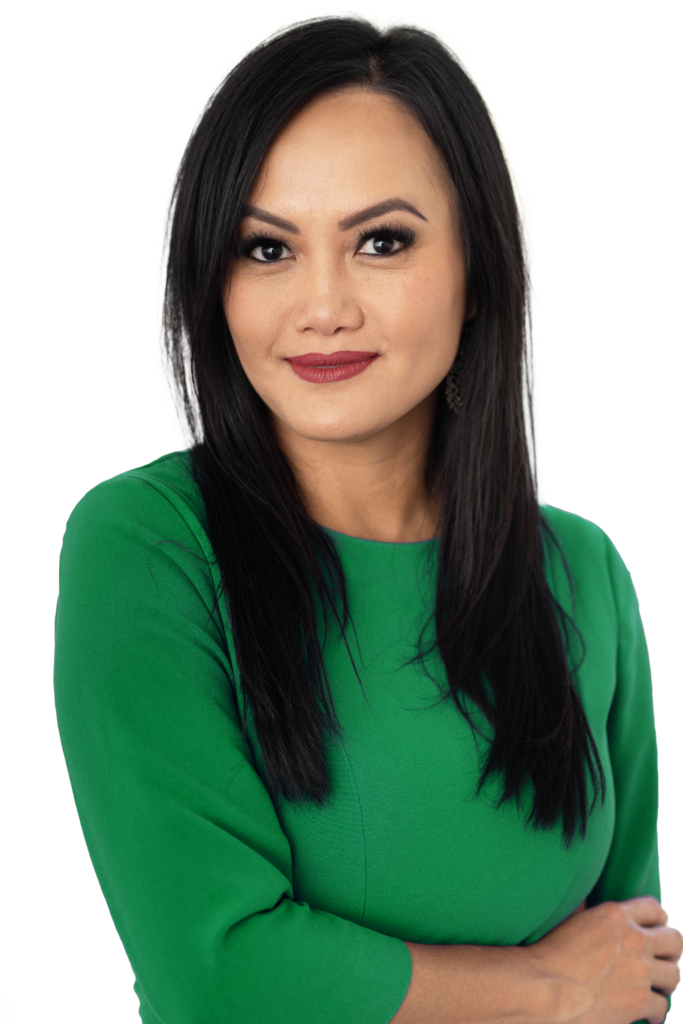
Dr. Rosa Bernier has been working in health care for 14 years. In the last two, she says, real waves of rural health care advocacy are finally rippling across state as well as federal entities, stakeholders, and partners.
“This is the first time you can see that they want to bring attention to rural communities,” says Bernier, chief medical officer of PanCare of Florida. “They are understanding that the need is there. And that accessibility needs to go where
it’s necessary.”
Eddie Gonzalez is a partner at the Tallahassee-based data convergence company Ruvos and chair of the Greater Tallahassee Chamber of Commerce. As a key player involved in health care data communications with roots in the local community, Gonzalez sees three major factors at play for rural health care advocacy in Northwest Florida: The Florida State University (FSU) partnership with Tallahassee Memorial HealthCare (TMH); the Rural Renaissance Bill (SB 250) that is currently pushing through legislature; and new grant funding from the Rural Health Transformation (RHT) program.
Gonzalez says the FSU-TMH partnership, announced in September, will “have a ripple effect across the region when it comes to development and jobs,” and that it will “revolutionize health care for rural communities” from Jacksonville through to neighboring regions in Georgia and Alabama. The partnership plans to expand access locally to specialist care.
Dr. Temple Robinson, CEO of Bond Community Health Center, says the greatest challenges in rural health access today come in the form of financial instability and lack of awareness for available services.

Photo by Mike Fender
“The economic pressure of providing sustainable, quality health care to uninsured or underinsured patients who reside in counties that are financially constrained is the biggest challenge,” Robinson says. “The other challenge is to ensure that the targeted population is educated on the services that are or will be available and the importance of preventive care and continuous chronic disease care.”
The Rural Renaissance bill, introduced by Senator Cory Simon (R, FL), will help alleviate some financial burdens, requiring the state to give preference to rural areas for technical assistance funding. It will also revise the conditions to be considered a fiscally constrained county.
Currently, the Florida Department of Revenue defines 10 Northwest Florida counties as fiscally constrained: Holmes, Washington, Jackson, Calhoun, Gulf, Gadsden, Liberty, Franklin, Wakulla, and Jefferson. That number could potentially expand under the Rural Renaissance Bill, which aims to enhance rural infrastructure for schools and hospitals and expand opportunities for education, commerce, and health care, according to Senator Simon.
The bill’s $218 million in funding has goals to create an Office of Rural Prosperity to administer Renaissance Grants and provide block grants to grow populations. Some grant funding from the bill will cover start-up costs for new health care practices, including facility construction, leasing expenses, medical equipment, and furnishings, in an effort to encourage an influx of medical providers to rural areas.
As part of the new RHT program, Gov. Ron DeSantis announced in December that Florida will receive $209 million in rural health care funding in 2026. The funding will focus on expanding the rural health care workforce, training initiatives, and accessibility.
“This is amazing for rural communities; this is their year,” Gonzalez says. “The federal government is basically saying, ‘We’re getting the funding to the boots on the ground, the actual people that are doing the work.’”
“The rural community is an investment,” says Bernier. “Rural clinics might not always be full of patients … But every person that you see there has a real need, so you solve a huge problem as a community.”
Bernier says true advocacy is action. The RHT program is a step in the proactive direction.
“It’s necessary to bring the service to them,” she says. “No matter how they use it, to improve facilities or hospitals, bring in specialists, more access to telehealth, to bring primary care doctors to those areas. Right now, we have a huge deficit of primary care providers.”
However, the National Rural Health Association (NHRA) says that “RHT funds may not fully offset the anticipated reductions in Medicaid funding and exchange revenue related to other One Big Beautiful Bill provisions, partly because states may choose to use the funds for purposes other than providing payment support to rural providers.” The NHRA recommends that providers approach anticipated RHT program funding as “just one part of a long-term plan for financial sustainability.”

Photos Courtesy of Bond Community Health Center, Inc.
Dr. Bernier says effects from recent cuts in Medicaid funding are not initially being felt at the provider level but that she expects to see loss of benefits widespread across patients in rural areas and beyond.
“They may not have insurance coverage, but we are here to serve,” Bernier says. “They can really have uninterrupted access to health care because we exist.”
“I know there have been a lot of changes to the marketplace and Medicaid,” says Lindsey Cross, PanCare’s mobile programs director. “I think that people are moving to self-pay out of necessity. I think that if it continues the way it is, we’ll probably see a lot more of that.”
PanCare, a federally qualified health center, has facilities and mobile units in 10 Northwest Florida counties—Walton, Bay, Holmes, Washington, Jackson, Calhoun, Gulf, Gadsden, Liberty, and Franklin—eight of which are currently defined as fiscally constrained.
While Walton County doesn’t qualify, due to the affluence of the beach communities along Highway 30A, Cross says that inland rural communities like DeFuniak and Freeport are where she sees some of the highest demand for the clinic’s free mobile services.
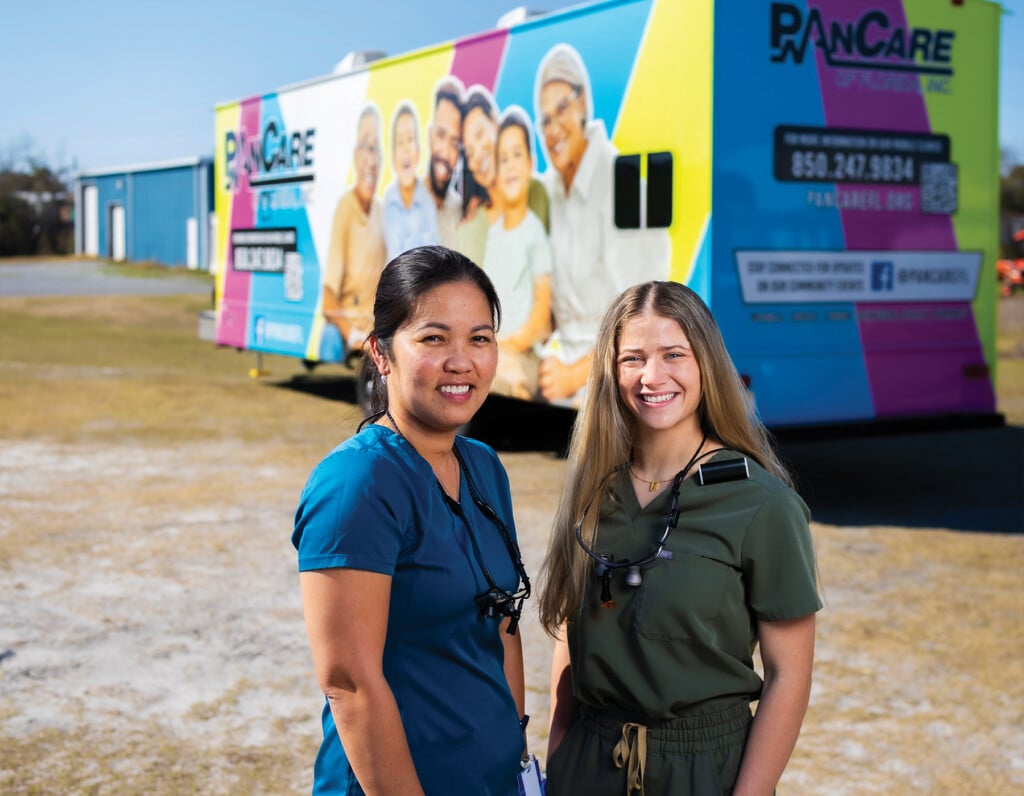
PanCare’s sweeping mobile program encompasses medical, optometry, dental, and behavioral health. The mobile units tour the 10 serviced counties, stopping at schools and health fairs to offer basic medical services on-site. Nearly all of the services provided through PanCare’s mobile units are offered at no out-of-pocket cost to the patient, regardless of coverage.
“There’s no copay charged, and we don’t charge for a visit regardless of the insurance status,” says Cross.
Dental care, to include exams, cleanings, sealants, and even basic extractions, can be serviced on the bus. Optometry offers eye exams and other basic services. And medical provides primary care visits, immunizations, sports physicals, blood pressure checks, behavioral health services, and a variety of other services.
Bond CHC helps fill a gap in the fiscally constrained Wakulla County, as well as in Gadsden and Leon counties, also offering mobile unit services for medical and dental as well as door-to-clinic transportation services for patients. Bond plans to add mammography services to its mobile unit, too.
At PanCare’s brick-and-mortar clinics, costs are calculated using a sliding fee scale, which is based on income and household size. Clinics operate as all-in-one facilities that offer medical, dental, optometry, and pharmacy all on-site.
Telehealth services have drastically expanded access to behavioral health services and other general care areas. PanCare offers counseling, psychiatric, prescription refills, and lab result reviews via telehealth. Its telehealth programs work in coordination with the mobile units and some schools to provide services to students.
Bond supports telehealth accessibility with its “portable hot spot library,” which gives patients internet access for appointments and offers remote blood pressure monitoring.
PanCare was awarded a rural grant for improvement on telehealth services, which was used to purchase advanced telehealth equipment. Working with a health tech or a nurse on-site at a partnering school, a provider can virtually listen to your heart and lungs through stethoscope feedback and look in on a patient’s throat, ears, or eyes to evaluate remotely. This allows providers to detect pneumonia, heart murmurs, ear infections and ruptures, and more, all done remotely.

Photos Courtesy of Bond Community Health Center, Inc.
Mobile units, all-in-one facilities, and telehealth services are resolving barriers like transportation, minimizing trips that, in rural communities, can often amount to 30-60 miles from home to clinic to dentist to pharmacy and back. And free services and a sliding fee scale makes health care financially approachable for an increasing number of self-pay patients.
“Some of these communities only have us,” Bernier says. “Unless we are there, they will not have access to the whole package of things. So, we really meet a requirement for them.”
Ruvos plans to stand ready and waiting to help facilitate technological transitions and advancements as RHT program funding rolls out to communities.
“We are confident that there will be opportunities for Ruvos to help,” Gonzalez says. “We see ourselves sometimes as being the bridge between a hospital, a nonprofit or private hospital, and public health—not only a bridge technologically, because literally we move data, but also strategically.”
Moving data, Gonzalez says, is Ruvos’ bread and butter regionally, nationally, and beyond. The company has been a leader in disease and lab result reporting for 22 years. Working with federal entities like the Centers for Disease Control (CDC) and public health agencies like the Association of Public Health Labs and the World Health Organization (WHO), Ruvos has contributed to data solutions and the transference of major world health events like the COVID-19 pandemic.
In the last few years, Ruvos has returned a focus to its local roots, centering efforts in rural areas to contribute to the renaissance era that is arriving with new funding. Partners at Ruvos have recently created a new app, WellConnector, which they plan to roll out locally before its national launch. Gonzalez describes WellConnector as a health care wallet, housing patient records, files, insurance information, and more.
“WellConnector allows you to store all of the information on your phone in a secure fashion,” Gonzalez says. “When you go to the doctors’ office, you give them a QR code and it pulls in all of your information.”
WellConnector will help communicate records, results, prescriptions, and general patient information across primary care physicians, specialists, and new providers. Any internal updates to questionnaires or forms will notify the patient to provide the updated response without having to refill or refile previous information.
Bernier calls this a dynamic health record something she’s been hopeful to see the industry achieve.
“That kind of universal dynamic health record, that the patient can take from one place to another, will facilitate our work a lot,” Bernier says. “It is a real access to health and wellness and an improvement to the health care system.”
With funding on its way and new systems at play, are we prepared to follow the path to a rural health care renaissance? Gonzalez thinks so.
“The roads are there,” he says. “But there are some potholes. We need to patch up those potholes. There is modernization that is needed. But there is a highway system. We do not have to invent anything from scratch. Funding like the RHT program and others will hopefully provide that needed modernization funding.”
Robinson says solutions will require open minds and shared interests.
“This will take a multi-system approach from local, state, and federal governmental leaders,” she says. “It will take nontraditional partnerships of government, private organizations, businesses, and nonprofit organizations. It may require changes in workflows and adaptation of new technology.”
At the heart of it all, collaboration and community will be the final pieces of the puzzle—two things in which rural Florida is consistently adept. ▪