INNOVATION THROUGH REGENERATION
Regenative Labs paves the way to the future of healing
An emerging and quickly evolving field, regenerative medicine was just several years ago deemed by the Mayo Clinic as a practice caught between “hope and hype,” as the concept of utilizing stem cells to repair missing or impaired connective tissue within the body was largely unexplored.
But for Tyler Barrett, chief executive officer of Regenative Labs, it was a new frontier.
Leading the charge for this Pensacola-based, FDA-registered laboratory and biotech manufacturing company for the past three years, Barrett, who boasts an extensive background of leadership across software and health care sectors, says he operates on the principle that “medicine doesn’t reward hype; it rewards results that are repeatable, scalable, and trustworthy.”
As such, Barrett knew he wanted Regenative Labs to control every aspect of its operation.
“We chose to build a company where we manage everything from donor screening and tissue procurement to processing, quality, and distribution,” Barrett says. “That’s because long-term impact comes from owning the entire system, not just a piece of it.”
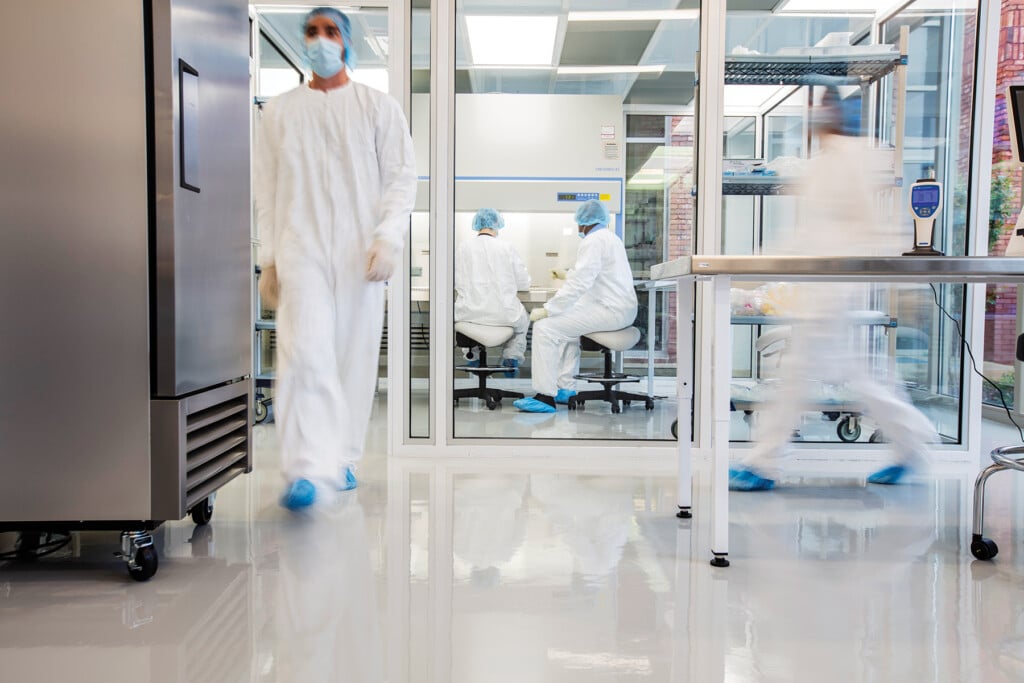
Barrett acknowledges Pensacola isn’t exactly a biotech hub, but for him, the destination offers a good work-life balance and a strong spirit of community collaboration. He calls the Pensacola laboratory the operational heart of Regenative Labs, designed for “precision, consistency, and scalability.” Too, it allows the company to continue hiring and growing locally as they partner with local physicians, universities, and clinical specialists.
“I was inspired to create this because there was quite a bit of anecdotal information in the market saying there was a phenomenon occurring where people were getting better and outcomes were being observed,” he says. “But when I looked at the medical literature, there was very little written on the clinical use of these types of products. After conferring with my attorneys to make sure this approach was fully compliant, we set out to close the gap between what was known and what is possible.”
That gap is the driving force behind Regenative Lab’s mission of facilitating predictable patient outcomes by producing the highest-quality tissue possible. They focus on the creation of human-derived birth tissue products, such as Wharton’s Jelly, which is harvested and developed through highly regulated, standardized processes.
It’s a divergence from conventional interventions focused on symptom management by offering non-surgical options designed to directly address underlying issues. “We work with everyone from orthopedic physicians and pain management to podiatrists and even functional medicine practitioners … if a physician can identify missing or damaged tissue, this provides new, healthy tissue to replace it,” Barrett says.
What differentiates Regenative Labs, Barrett says, is a dedication to rigorous reliability. “Success isn’t about innovation; it’s about execution,” he says. “We’ve invested heavily and repeatedly in quality frameworks and operational clarity, so physicians know exactly what they’re working with.”
As a result, Barrett has noticed within the medical market a shift in expectations, where more and more clinicians are looking for partners to support growth without risk.
“We’re bringing structure and reliability into regenerative medicine,” Barrett says. “We want everyone to experience its benefits, but we want to do that responsibly and sustainably.”
The biggest aspect of gaining credibility is through data, Barrett says, describing Regenative’s outcome repository as one of the largest in the country with over 10,000 outcomes sets across myriad clinical use sites.
“We measure success by patterns,” he says. “And what we’re seeing is overwhelmingly positive averages across the board. Over the past several years, we’ve published 15 studies and plan to release additional research in collaboration with local doctors in 2026.”
These studies can be perused on the company’s website, regenativelabs.com, and offer some fascinating insights into the capabilities of regenerative medicine.
One of them, published last year, explores the case of an 85-year-old patient told she would require knee replacement surgery. But upon receiving a Wharton’s Jelly allograft, the patient, at a five-year follow-up, continued to demonstrate improved mobility and joint space, avoiding the strenuous procedure altogether.
For Barrett, his work is all about impacting people’s lives and helping define what a mature regenerative medicine industry could look like. Regenative Labs will continue to publish data, bolster their internal systems, and set standards that will allow the industry to support innovation and grow conscientiously.
“We see regenerative medicine following the same pattern as other transformative industries as it moves from early experimentation to trusted infrastructure,” Barrett says. “We’re building for permanence, and we’re proud to be doing that here in the 850.” ▪