Nature Versus Business
The battle of land, water, and dollars
Progress along the Panhandle can be seen with every downed stand of trees along the Northwest corridor. New suburb developments are sprouting faster than flowers in the spring, bringing new businesses, increased population, and changing demographics. One thing is certain: The character of this part of Florida is evolving.
For many, the major draw to the area is the abundant wildlife, beautiful beaches, and vast stretches of nature. Stepping into a park or forest here is like walking through a time before modernization. The magic of these spaces needs to be preserved, as an attraction but also as a legacy for future generations.
From a business aspect, the annual economic benefit can generate significant revenue for the state, rivaling theme parks for tourism dollars. According
to a study by Disney in 2022, their parks have a $40 billion impact across Florida, while fishing alone brings in $14 billion a year. Tax revenue from other outdoor recreation activities adds $10 billion, with another $5 billion for wildlife viewing. Altogether, public-owned parks and land have a value of over $60 billion across Florida, according to figures published by The Nature Conservancy.
Growth and preservation are often opponents on a field of battle that stretches from Pensacola to Tallahassee and beyond. Greg Knecht thinks it is a battle where everyone can win.

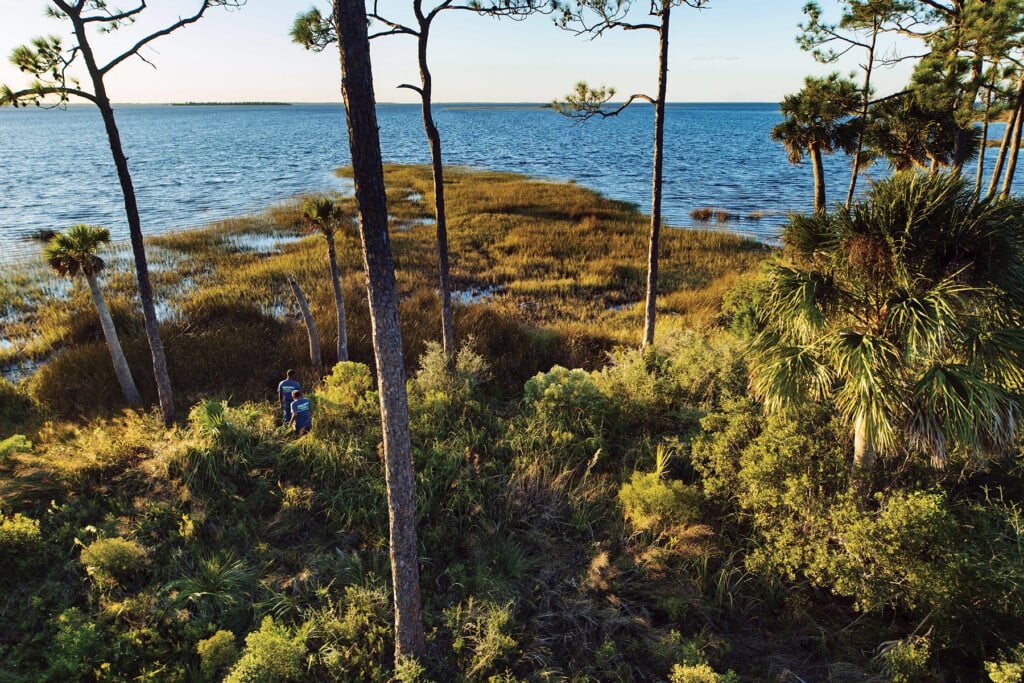
Photos by Andrew Kornylak Courtesy of The Nature Conservancy
Knecht is the executive director for The Nature Conservancy in Florida. The 59-year-old Tallahassee resident believes the Panhandle is still a blank slate that can manage development and keep its character. He claims, “We owe it to our current and future citizens to make sure we do it right.”
The Nature Conservancy is a nonprofit tasked with conserving land and water resources by working with communities and businesses globally. They have been active in Florida for 60 years and have worked to protect
1.2 million acres of vulnerable lands and waters in the state. They own and manage over 40,000 acres that include four nature preserves, which are open to the public.
That includes the Apalachicola Bluffs and Ravines Preserve and covers almost 6,500 acres along the Apalachicola River. Located near Bristol, Florida, The Conservancy is working to protect longleaf pines in an environment featuring scenic bluffs and the reintroduction of the indigo snake. Knecht hints they hope to add another 2,500 acres close to that area in the near future.
Knecht has spent 13 years with The Nature Conservancy, three as their director. He says the preserve near Bristol is just one example of how important it is for the Panhandle to take a managed look at commercial and residential developments in the area. Knecht says, “We know it’s coming, right?”
While acknowledging some places along the coast have not approached development in a thoughtful way, he notes some have. “Seaside is not for everybody. Rosemary Beach isn’t for everybody, but they both have a character that doesn’t look like you picked up a portion of the I-4 corridor and dropped it on the Panhandle.”

Photos by Andrew Kornylak Courtesy of The Nature Conservancy
With proper planning, Knecht claims the Panhandle can avoid problems that are plaguing Central Florida, where growth has exploded. “They just don’t have the water,” he says, which is forcing the area to look at more expensive ways of finding and providing water to support that growth. In those areas, the days of “cheap water” are limited.
“When your wetlands begin to dry up, and your surface waters are not getting the water they need in your estuaries, you have problems,” Knecht says. “And in the wet season, because you have grown in a way that wasn’t thought out, you now have water with no place to go, and it goes to the Indian River lagoon. And you have manatee die-offs and things like that.”
While those problems have not been experienced along the Panhandle, Knecht says the community can learn from those mistakes. Knecht doesn’t think any of the problems in other parts of the state are intentional acts, but it is important for other areas to capitalize on the lessons learned.
In their 2025 Florida Impact Report, The Conservancy listed safeguarding and revitalizing water as one of two priorities in their goals leading up to 2030. Protecting and restoring land was the other.
The Conservancy has been a partner in establishing three estuary programs along the Panhandle to improve the vitality of the waterways. An estuary is an enclosed body of water where salty seawater mixes with freshwater from rivers.
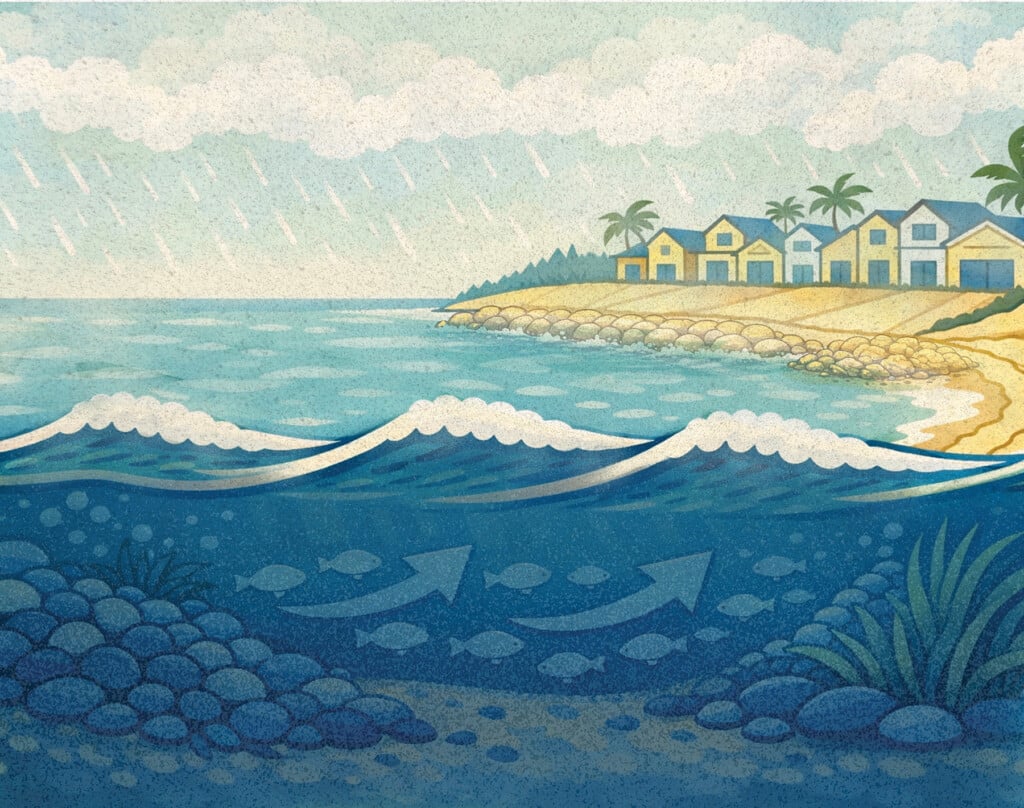
The three include the St. Andrew and St. Joseph bays, the Choctawhatchee Bay, and the Pensacola and Perdido Bays Estuary Programs. In Pensacola, they have been successful in bringing back an area that was once declared “dead for fishing” in 1971. According to Knecht, in Pensacola and Perdido Bays, The Conservancy partnered in a big oyster restoration project that produced 33 new oyster reefs.
Matt Posner, executive director for the Pensacola & Perdido Bays Estuary Program verified that The Nature Conservancy was instrumental in advocating for the program back in 2018. “The TNC and PPBEP have collaborated on numerous projects,” Posner says, “but perhaps the most transformational was collaborating on the development of the Pensacola Bay Oyster Restoration Initiative.”
The program has a goal to restore 1,500 acres of oyster habitat over 10 years. Posner credits the partnership with TNC, their national attention, and expertise in helping propel the restoration efforts.
Knecht says The Conservancy donated $1 million to the projects as an example of “putting our money where our mouth is.”

Photos by Andrew Kornylak Courtesy of The Nature Conservancy
The Conservancy works with a number of partners on various projects across the state. Knecht counts their work with The St. Joe Company as one of the best examples of a long-time working relationship. He says they have worked together most of the 60 years The Conservancy has existed.
“They have been a really good long-term partner,” Knecht says. “We’ve always respected one another and had great dialogue.”
Coming to work every day is easy for Knecht because he sees nothing but opportunity in Florida for innovative conservation work. He wants Florida to lead the country and feels in many ways it is currently doing just that. He says, “We have incredible water policy, and with the legislature and governor continuing to appropriate funds to the conservation space, we can continue to grow.”
Knecht feels the state has the ability to chart its own future for the next 30-plus years as development continues, claiming, “The folks in the 850 can be leaders for the rest of the country.”
The director is a frequent visitor to the state parks in the Panhandle. He loves St. Marks National Wildlife Refuge, St. George Island, and Grayton Beach. “We are so fortunate here in North Florida to have the public lands available,” he says. “So many wonderful places.”
Despite the increased development, new demands for businesses, and a swelling population, Knecht is optimistic that the changes can benefit nature lovers, conservation, and economic impact without destroying the ecosystems that are attracting tourists and migrants in the first place.
Knecht says, “I truly believe we can have it all.” ▪