Diane Scholz
Economic Development Director, Florida State University-Institute of Government (IOG)
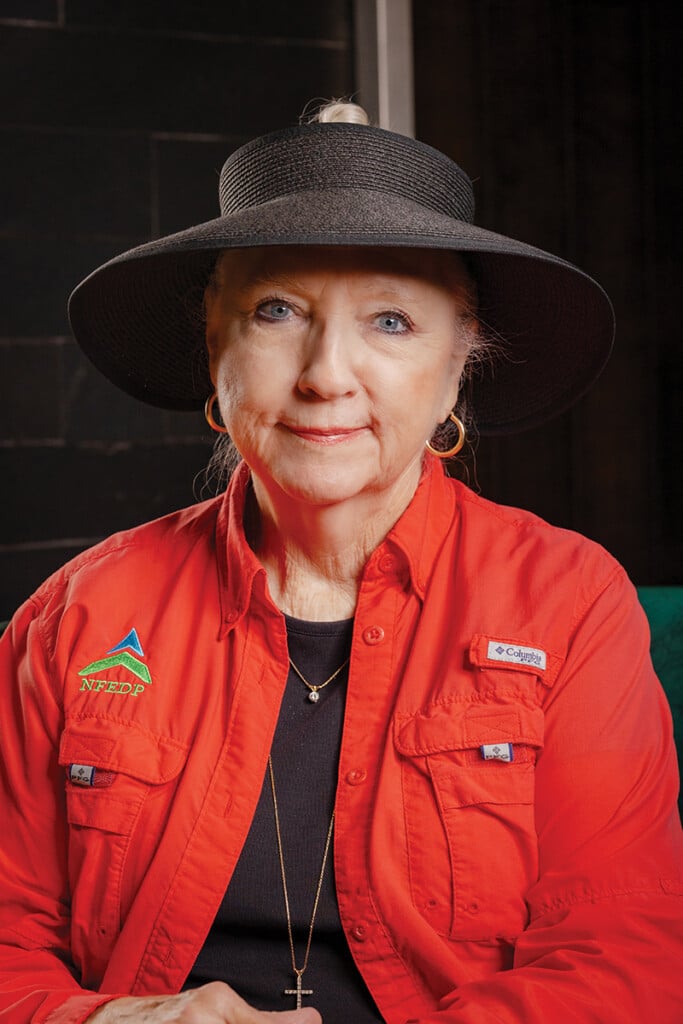
Diane Scholz has spent more than two decades advancing economic development across rural Florida. As the economic development director at the John Scott Dailey Florida Institute of Government at Florida State University, she works closely with the North Florida Economic Development Partnership (NFEDP) to strengthen opportunities for rural communities. Her leadership has supported major recruitment initiatives, including bringing Binderholz Live Oak to the region, one of the largest sawmills in the world. Prior to her work with FSU, she served in the Governor’s Office of Tourism, Trade and Economic Development, focusing on rural areas of opportunity. She has also led chambers of commerce and community revitalization efforts. Scholz is committed to improving quality of life through collaboration, resource development, and sustained local partnerships.
How do you define success?
I define success by realizing there is a need that an individual or community has and researching and developing a plan to improve their situation. It is not so much about eliminating the need as much as improving the situation. There is a lot of personal gratification when you see a positive result in people’s lives.
Tell us about a time when you were met with a crossroads decision. How did you face that?
After 9 ½ years in the Governor’s Office of Tourism, Trade and Economic Development (OTTED), providing rural economic services to 33 rural counties, the bureau chief retired. I chose to resign from OTTED and join Florida State University-Institute of Government, which contracts with the NFEDP to continue working closely with its 14 Rural Area of Opportunity-designated counties, rather than seek the bureau chief management position. I sincerely treasure the opportunity to continue working with the 14 NFEDP counties’ citizens, elected officials, and businesses.
Who has served as a mentor or inspiration to you in your career journey, and how did they impact your path?
I had owned my own computerized machine embroidery business, Fancy Stitches, prior to moving overseas in August 1990. The first supervisor I worked for in Seoul, Korea was a GS-15 who oversaw MWR (Moral, Welfare & Recreation) for the 8th Army and the Joint Forces Command. He was a very intelligent, common-sense, kind, considerate, thoughtful man who possessed very positive visions on how best to take care of the troops and their families. He was the first supervisor I ever observed who would enthusiastically lay out his vision and then empower staff to take that vision and truly trust them to do their best at implementing the vision.
What lessons have you learned along the way that have improved your professional life?
I’ve observed many times that people who were highly aggressive in trying to get to the so-called top, missed or skipped over important learning experiences. Far too often, they got where they wanted to be but did not have the wealth of in-depth experience to stay at the top for long.